Full Dose
On generosity as identity, the pattern it builds over time, and being the emergency contact friend.
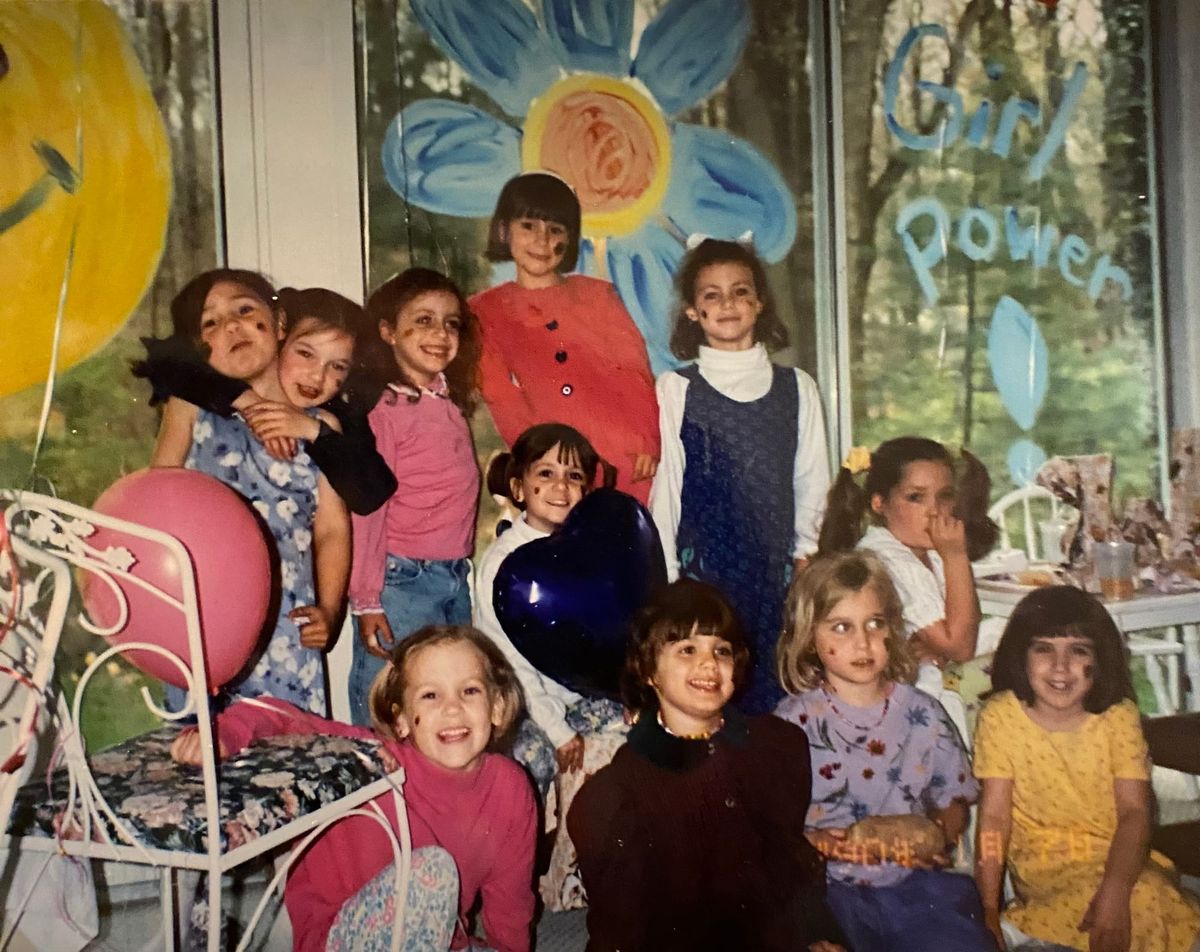
This week in some countries, it's all about friends. Yes, many consolation texts about how terrible the World Cup final went, but Monday also marked Día del Amigo. A day so deeply cherished Hallmark only wishes it came up with the idea.
No, rather, thank the moon. On July 20th, 1969, an Argentine dentist watched the moon landing and was so moved by the connection between humanity and the universe that he sent hundreds of letters to different organizations worldwide to promote the idea.
I've been thinking about how I show up in my friendships a lot lately, before I remembered the date. But a few "feliz día" texts made me sit a little longer to write. Argentina has always been my reference point for what it looks like to give without measuring.
I had it a little easy making friends there, I'm not going to lie to you. I arrived as Sari la yanqui - the immigrant, bright shiny new thing. Still, the generosity felt at times overwhelming.
One friend offered to put her parent's house up for collateral as my apartment deposit. Another fellow grad student I had just met asked me if I wanted to join his family plan instead of my pay-as-you go phone. (I declined both - but ask me another time about the real collateral my roommate and I got with approximately eight different relatives and notary sign-offs). A close friend of mine insisted on driving an hour into the city just to help me move my limited belongings ten blocks, so I naturally bestowed on him the customary American reward of the move: pizza and beer. My best friend - who I know is reading this and I need her to know I have never forgotten - went to Immigration en la zona del orto to wait in line for me and confirm all the ways I needed to be of legal status in the country. Because that's just who she is, and that's just who they are.
Argentine abundance shows up most on Sundays. An asado starts at noon and, if you're lucky, it ends at nine in the evening. Hours of eating, talking, laughing, people hardly check their phones. They've perfected the art of the sobremesa — the time after a meal when nobody moves, and the conversation continues to flow because being together is reason enough.
I had never seen people be so casual about closeness. So unguarded about giving — completely unbothered by the idea that caring for someone deeply was anything other than unremarkable.
This is a culture that does what I do naturally, at scale. I didn't learn it from them, of course. I had already arrived knowing how to give. I just hadn't traced it back far enough to see where it had started.
Somewhere, at a kitchen table I no longer remember clearly, a family member told me I had an old soul. I was young enough that I took it as a compliment without fully understanding what it meant.
I spent my seventh birthday wish asking my uncle to quit smoking because my aunt was pregnant and I wanted him to be around. I dove into organizing custom t-shirts for a childhood friend who had cancer, creating a literal support system because that's what I do when someone I love is in need. In the holiday season, I spent my flower shop earnings on other people's gifts until a friend smirked and called me "Sarah Claus", which I wore like a badge of honor but probably should have examined more closely.
At eleven, I edited my father's eulogy for my grandfather. An adult handed me his grief and asked me to make it better and I said yes, of course, hand it over.
Long before crisis communication, security, and risk were roles on my resume — before briefing CEOs that yes you might get kidnapped if you go to San Pedro Sula but it's OK here's what to do — the muscle had already hypertrophied. Knowing what to say when everything falls apart. I was already the emergency contact friend.
I'm good at it. I've always been good at it.
But, ever the noticer, I found that I was witness to far more crisis than joy: I knew how to hold people in the dark. I had become so reliable in emergency that I somehow became optional in the ordinary.
Here is what a lifetime of that builds:
You become good at showing up. And then you become known for it — both out of love and because you have made yourself so consistently present in the hard times that the small victories stop feeling like they need to reach you.
I take it in with clarity rather than bitterness, though. It's more about identifying patterns I've lived in for a long time.
But how do you relay that to someone you just met? How do you say, "I will show up for you completely, in ways you probably can't imagine yet?"
You don't, really. You just start over and try to do it differently next time.
Boston doesn't know me yet (literally per my last e-mail), and I moved here knowing almost no one.
More than I'd like to admit, I notice it daily: I have very few people to text when something funny happens on the street. No standing plans.
That absence has a shape.
What no one tells you about making friends in your thirties is how structurally absurd it is. In school, at the office, you have institutions that force you together long enough that closeness had an opportunity to flourish.
But there's no scaffolding in unstructured remote work in a new city. You have to be almost embarrassingly intentional about it. Follow-up after the first coffee, suggest the second one, essentially ask people out with none of the language adults have developed for that situation. Awkward in a way that feels disproportionate to what you're actually asking for which is just: can we do this again sometime soon?
In my past lives, survival bonds were sufficient. Boston requires something closer to faith.
This is the part I'm still working out how to say:
I am, like a crow, attentive and deliberate about the people I love. I keep track, I find ways to bring tiny pebbles of joy. I know how I give - too much, sometimes, parts of myself away for others to keep. I'm not afraid of that. This isn't an exercise in vulnerability or putting myself out there.
It's about how much I hold back.
Not because I don't want to give. Because I give so much, and am acutely aware of it, I'd rather offer less than have someone feel the pressure of what I'm capable of. So I calibrate, I measure. I decide in advance what's appropriate and stay inside it.
The result is that people often find a version of me that's already been diluted for their comfort. Which, in a way, can be considerate. Even if no one asked for that.
I have learned so much about myself and my own generosity through the role I play in friendships. Now, I'm unlearning the process of making myself smaller and easier to receive.
Some people might be able to use a stronger dose.
If you're reading this, you're probably one of the people I'd give it all away for. Consider this my pebble of joy for the week — you're welcome, and I'm sorry, and thank you.