Unreliable Narrator
I remember everything except myself in the scene.


You can't control the things people remember about you.
I've joked many times that I have the curse of remembering everything that's ever happened to me, but that isn't quite accurate. I remember the room: the smell, the light, who was wearing what, who said what. I don't always remember myself in it. What I said back, what my face did, what I didn't do but might have been feeling. I'm the narrator of my own book and somehow a gap in my own scenes.
In fiction, an unreliable narrator isn't always a liar. It's someone whose account you can't entirely take at face value, because they leave things out, flatter themselves, or are completely certain of things that aren't so. I'd like to enter a plea that this isn't a defect, just the human condition. I'm one, but so are most storytellers.
My memory is full of collected details: a sound, a gesture, a cuticle observed a little red and raw. The way someone averts their eyes or how their smile lands. It's often how I metabolize people and how I keep them alive in my head.
To further embrace my millennial cringe, I'll reference a fan favorite musical here: you have no control over who tells your story — whoever holds the pen decides which details survive. I'm acutely aware of that, of course, because most of the time I'm the one holding it.
Take, for example, this week's character sketch: my amiguillo, Luis.
We met in Buenos Aires in a ragtag group of foreigners studying abroad, continents and cultures colliding with no plan. My ignorance was at an all-time high, and apologies again to our Austrian friend who looked at me incredulously when I asserted Red Bull was an American product. I was there to learn, right?
Luis was the cool one in our crew: collected and affable. He gave away trust that hadn't been earned yet, insisting on walking some of us girls home after nights out in a way that always felt chivalrous. One of our first outings was the "expat" circuit — to locations with names like el Alamo and Temple Bar. In the photos from that night you can almost smell the sticky floors.
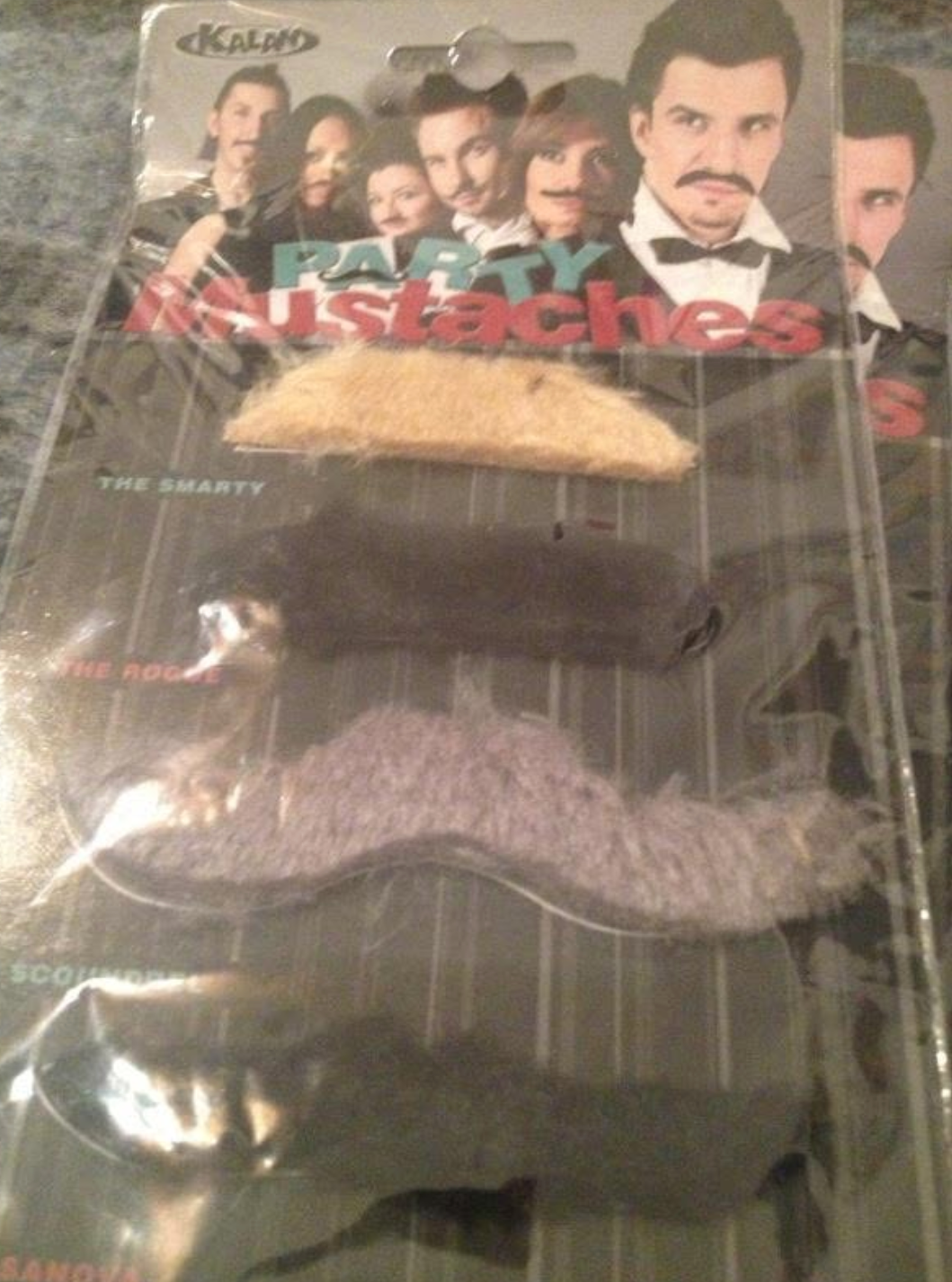
He might be the kind of guy who missed the first Oktoberfest bus because he was not properly done getting ready. But hey, he had the flyest style in the group, with a signature bowler hat and scarf — he also wore a SpongeBob shirt and giggled over it regularly. Luis also had the most impressive mustache I've ever seen, the kind he twirled at the ends like a mischievous villain. It was 2012, and mustaches were all the rage, so the "party gifts" my mom sent me abroad with included stick-ons from Urban Outfitters. We absolutely used them, at a party at his place.
After another gathering ran into the wee hours, he and a Scotsman talked me into waiting in line for a nondescript bar called La Puerta Roja. This is before quick Google searches could tell you details, and the line was only men. I looked at them like, so help me God if we're about to meet Roxanne. But no, just a speakeasy that closed a few hours later. Undeterred, we continued our revelry into daylight and a breakfast of champions. We called it a "night" at a record 10:30 AM. I slept for eighteen hours after that.
I was thrilled to have him in another season of life when I found out he was doing an externship in New York during my senior year of college. He and a friend came down to Baltimore for a true American college experience, and he got a look at the slumlord special I lived in on Dartmouth Road. His one insistence? Popeyes. He said it with full Spanish phonetics, every vowel pronounced. Pop-ay-ayes. It still makes me laugh.
A few years later, I finally made it to Mexico City, which had been on my list since seventh-grade social studies class. I wanted to stand in front of the Diego Rivera murals I'd studied. Five days to some moms might mean "overstaying your welcome" but other moms insisted two weeks wouldn't even be enough. Different cultures, different layers of hospitality.
Luis taught me the biggest tell of gringos: how we eat our tacos. Turns out you're supposed to manage it with one hand. His brother took me for my first in CDMX, under a hot plastic tarp on the street where I happily dunked everything in consomé — their mom, hearing about it later, was mortified and delivered a lecture on how Americans historically fare with Mexican water sources (I was fine, btw). Luis brought me to a moody bar that served a cocktail topped with tarantula venom, which tingled your mouth and you were told you probably shouldn't have more than two of them (my bad). Every morning his mom woke me up for the next adventure and one day the whole family took a trip out to the pyramids of Teotihuacan, which were a sight to behold.
The last time I saw him in person was on a cold day in New York, when he was visiting with his family. We caught up over a beer in a spot reminiscent of Temple Bar, like nothing had passed. A few factors like the pandemic kept him and his mom from attending my wedding — but now I'm going back to Mexico City a decade later to celebrate him in all his glory.
That's my Luis. Anecdotes feel like accuracy, but they're not. I have no idea if he remembers teaching me about tacos or how I recall his skincare routine. They're just layers I happen to keep.
It works the other way, too. People narrating me. We all do it every day, but rarely is the articulation of other peoples' perceptions presented to us face to face (or screen to screen).
What I know about how I'm (mis)remembered, I generally have learned in passing. People who know me from high school consider me a bad driver because I failed my permit test the first time and didn't know how to parallel park. Sue me. A budding friend in DC once told me, "no worries, I know you're always late" to my horror, since I pride myself on being anxiously on time. But for her, it was simply true. She lived across the river and I rarely planned for the kinds of delays that got me there.
Sure, I think I'm direct, but I often speak in references and metaphors to illustrate my point — I recognize others may read my attempts as cryptic or get lost in translation.
Each of these has a grain of truth; it's not entirely fiction. The strange part is recognizing I'm no more reliable about myself than they are.
The ultimate concession that being known is a mortifying ordeal, but there's a flip-side to it: when a friend mentions something so small about you that you were sure no one had noticed and suddenly your heart feels held in their hands. That's the version of someone else's pen I'd take every time. Evidence that at least one narrator got a detail right that I never knowingly shared. I can't always see my own face in my scenes I narrate in my head, but someone else can, and they were paying attention.
While I can learn to accept all the ways I don't have control over my own narrative, I can also get curious. Vulnerable even. Instead of anxiously assuming, I can just ask: what do you remember? (it's okay, I promise it's rhetorical, but if you did I think I'd cry).
And I can keep being myself on purpose since I never know how I'm being perceived. What a weird, meta feeling, writing about being written about in other peoples' stories. Maybe some tequila will help.
I have blinked and the fall has gone by, and have felt very reflective as of late. Surely that'll do me well going into peak gratitude season, right?